
Atelier Journal
A Guide to Bespoke Bridal Couture: Designing Your Dream Lehenga
A bespoke wedding lehenga is rarely a single decision. It's a series of small, considered ones — a silhouette, a thread, a length of dupatta — that quietly add up to the dress you'll be photographed in for the rest of your life. This is how that journey unfolds inside our New Delhi atelier.
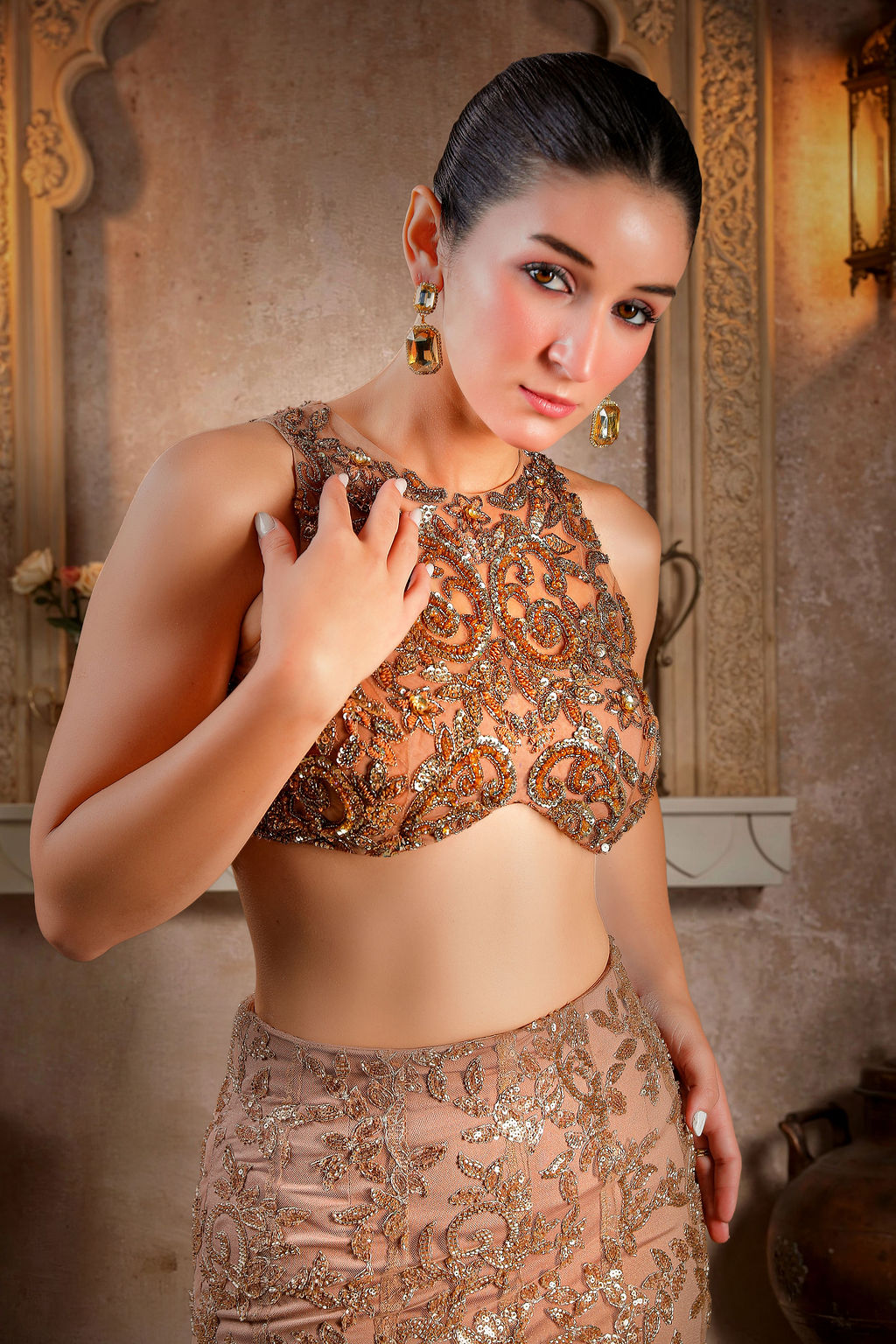
What "bespoke" means at Estelle Couture
Bespoke isn't a finish. It's a process. Every Estelle Couture bridal piece is drafted, cut, embroidered and finished in our own atelier in New Delhi, by the same small team from first sketch to last hook. There are no warehouses, no white-labelled embroidery houses, no surprise substitutions. You meet the people who make your dress.
That single-atelier model is what makes true customisation possible. Want a mid-rise waist instead of a high one? A neckline that sits a centimetre higher to frame a family heirloom necklace? A dupatta in your mother's wedding red rather than ours? Those become small, considered changes on the cutting table rather than production-line obstacles.
Step 1 — The consultation
Every bespoke commission begins with a one-hour consultation, in studio or over video. We talk through the wedding itself — venue, time of day, light, the ceremonies you're dressing for — before we talk about the lehenga at all. The dress is part of a larger picture, and the picture shapes the dress.
You'll leave the consultation with a shared mood board: a working palette, two or three silhouette directions, and a fabric story. Nothing is committed yet. That comes after the second meeting, once you've lived with the ideas for a week.
Step 2 — Designing your own lehenga
This is the part most brides ask about. How do you actually design your own lehenga? The honest answer is that you make four decisions, in roughly this order, and the rest follows.
- Silhouette. A-line for fluid movement, mermaid for sculpted drama, panelled flare for a fuller spin, trail for a processional moment. Your venue and how much you want to dance both matter here.
- Fabric. Raw silk holds shape and embroidery weight; organza moves like air and photographs beautifully in daylight; velvet anchors a winter wedding; tulle is the lightest base for heavy crystal work. We almost always recommend feeling the fabric in hand before committing.
- Colour story. A single saturated tone, a tonal gradient across skirt and dupatta, or a contrasting blouse — each reads very differently in photographs. We test against the venue light wherever possible.
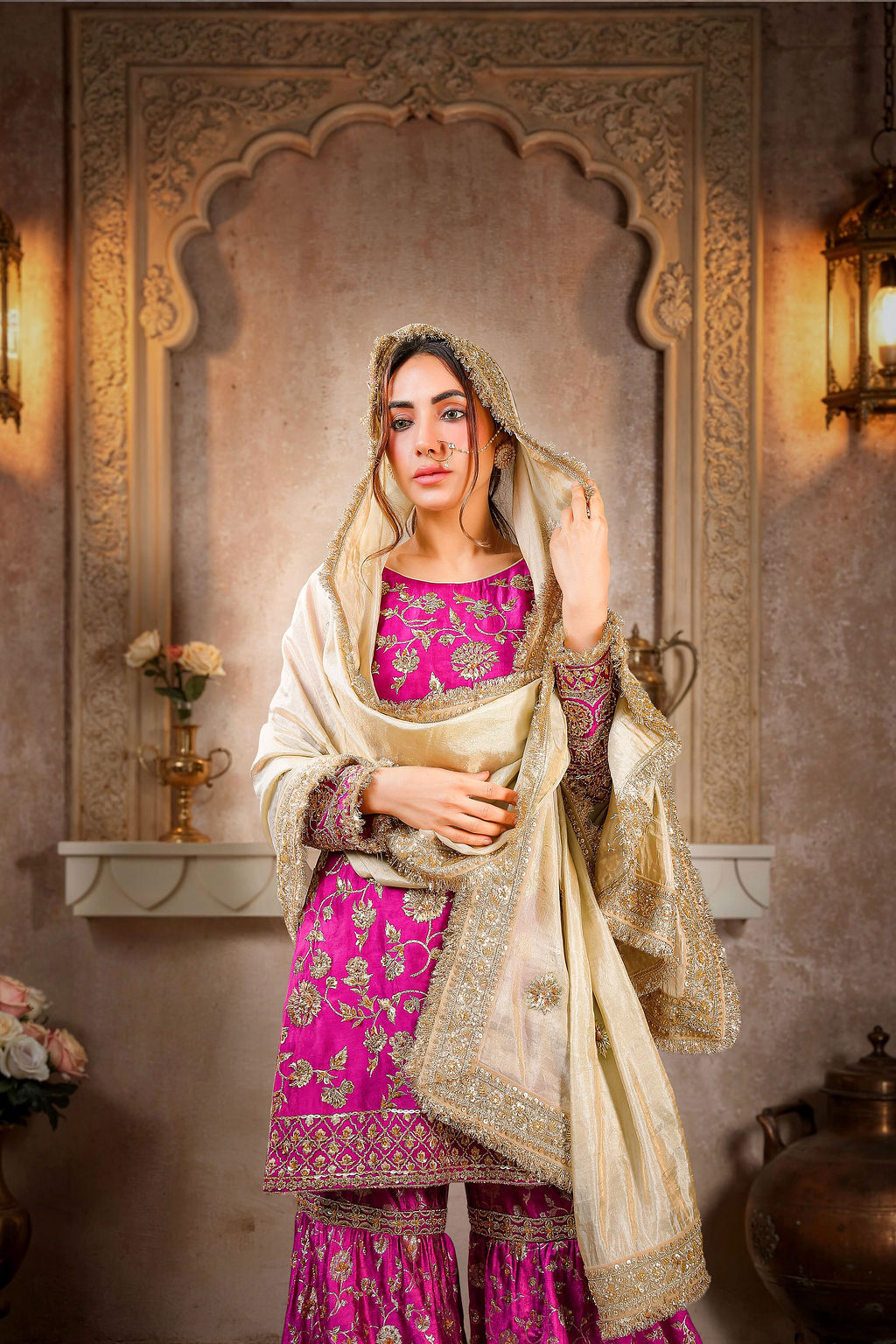
- Dupatta treatment. One dupatta or two, sheer or opaque, draped on the head or only over the shoulder. The dupatta is what carries you through the ceremony; it deserves its own decision.
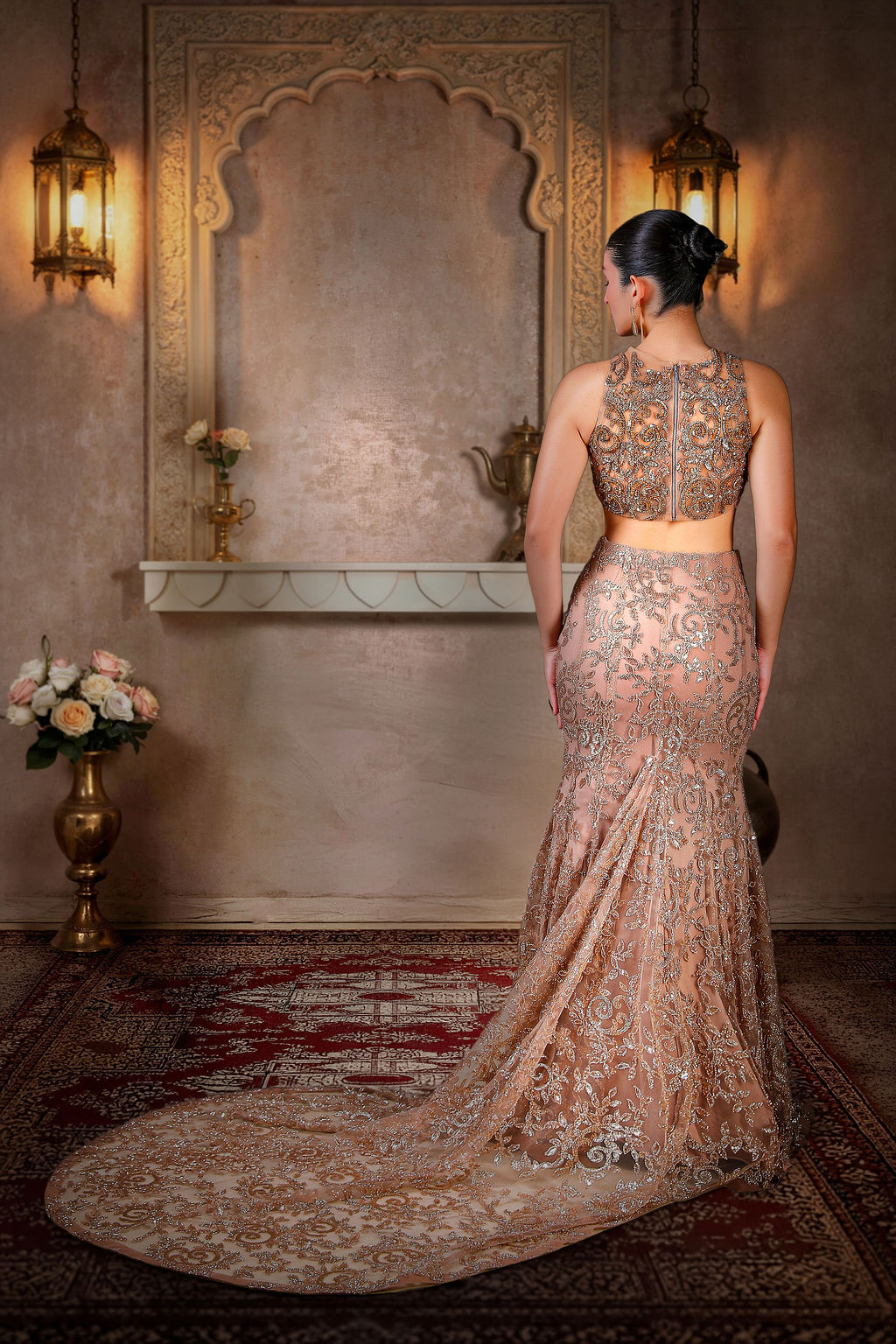
Step 3 — Embroidery & embellishment
This is where lead time lives. A fully zardozi-embroidered skirt is eight to ten weeks of work, frames stretched and karigars at the table six days a week. Lighter sequin and dabka work runs four to six. We always show you a stitched sample of the chosen technique on your chosen fabric before scaling — the way thread sits on raw silk is not the way it sits on organza, and a sample saves weeks.
Most Estelle Couture bridal pieces combine two or three techniques: a heavier base (zardozi or dabka), a finer accent (French knot, pearl, crystal), and a finishing edge (scallop, fringe, or a hand-rolled hem). The combination is what makes the surface look alive rather than uniform.
Step 4 — Fittings & finishing
Three fittings are standard. The first is a toile in muslin to confirm the silhouette on your body — no embroidery, no commitments. The second is the dress in its final fabric with embroidery in progress, where we adjust posture, hem and blouse. The third is two weeks before the wedding for finishing: hook-and-eye placement, hem-weighting, dupatta length, and shoe height.
Every bespoke piece is delivered with a written care card and one complimentary alteration within sixty days. We design with generous seam allowances so further adjustments stay possible long after the wedding.
Timelines & investment
Twelve to sixteen weeks is the ideal window for a bespoke bridal lehenga. Eight is the absolute floor, and only for lighter silhouettes. We open the calendar two seasons in advance — most of our autumn-winter brides commission in April and May, and spring brides in October.
Bespoke bridal pieces begin at INR 2,50,000 and scale with embroidery density and specialty fabric. Lighter occasion and reception lehengas start around INR 1,20,000. Every quote is itemised — fabric, embroidery, lining, finishing — so you can see exactly where the craft goes.
How to start
If you have a wedding date and a rough silhouette in mind, that's enough. The mood board and the palette are what we build together.